Services

Integrity, fracture, materials, welding, and inspection.

Codes of record include ASME BPVC, ASTM, NACE, DNV, and API. Work covers onshore and offshore systems.

Pipeline integrity & corrosion

Corrosion work here is written to an integrity decision: remain in service, repair, or replace. Internal and external mechanisms are modeled together with coatings, CP, and remaining-wall FFS in a single assessment.

  • Comprehensive corrosion analysis: internal CO2, H2S, and microbiologically influenced corrosion (MIC)
  • CP FEED evaluations and assessments; oxygen, seawater, and galvanic modeling
  • Erosion-corrosion and sand erosion
  • Fitness-for-service of general, localized, and pitting corrosion
  • Coating evaluation and CP remediation
  • Integrity management, corrosion management plans, and risk-based assessment (RBA) for onshore and offshore systems
  • Failure analysis of pipeline systems
  • Inspection related to pipe making and coatings
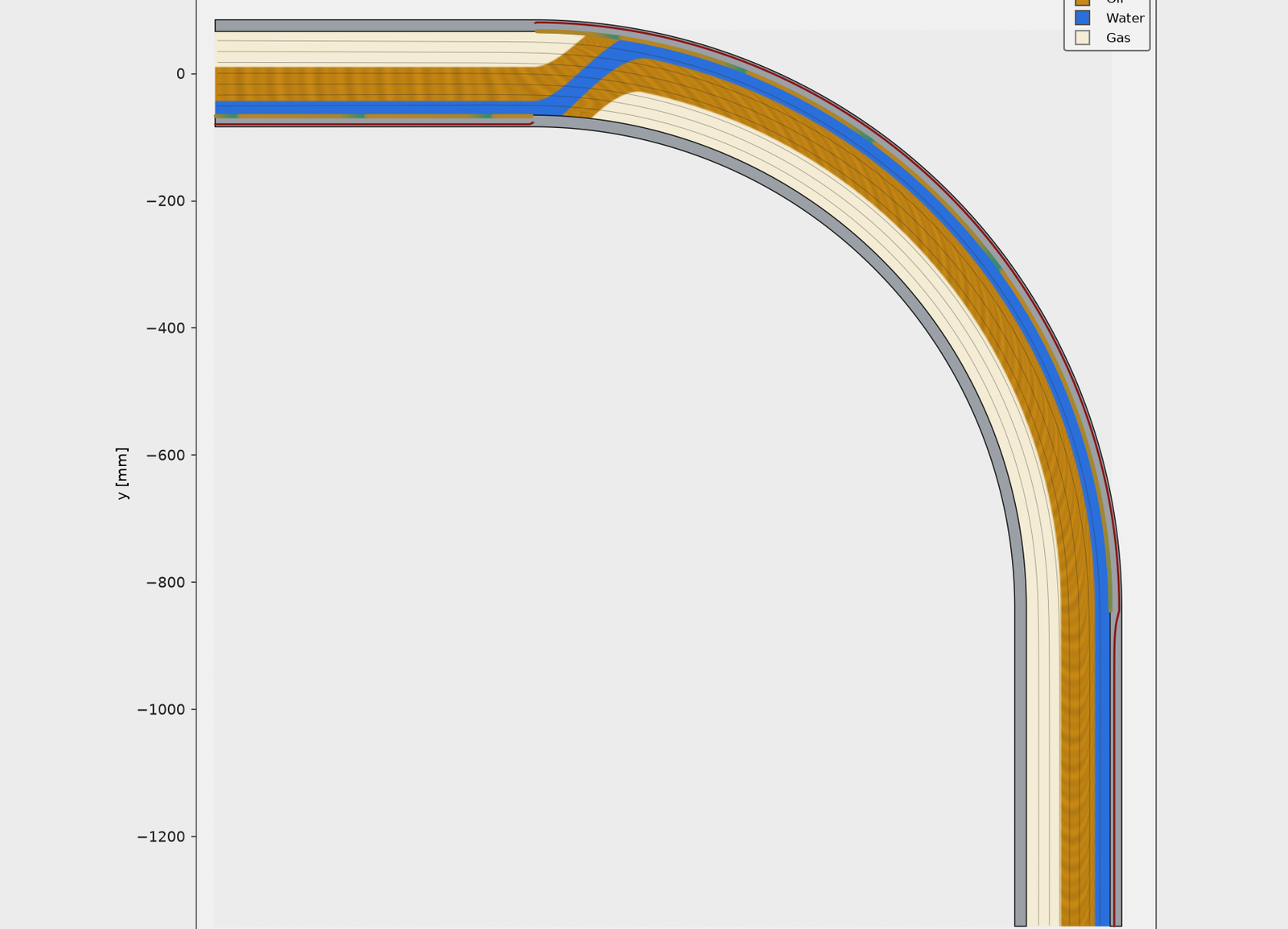
Oil, water, and gas layers through a 90-degree jumper elbow
Oil, water, and gas through a 90-degree jumper elbow.
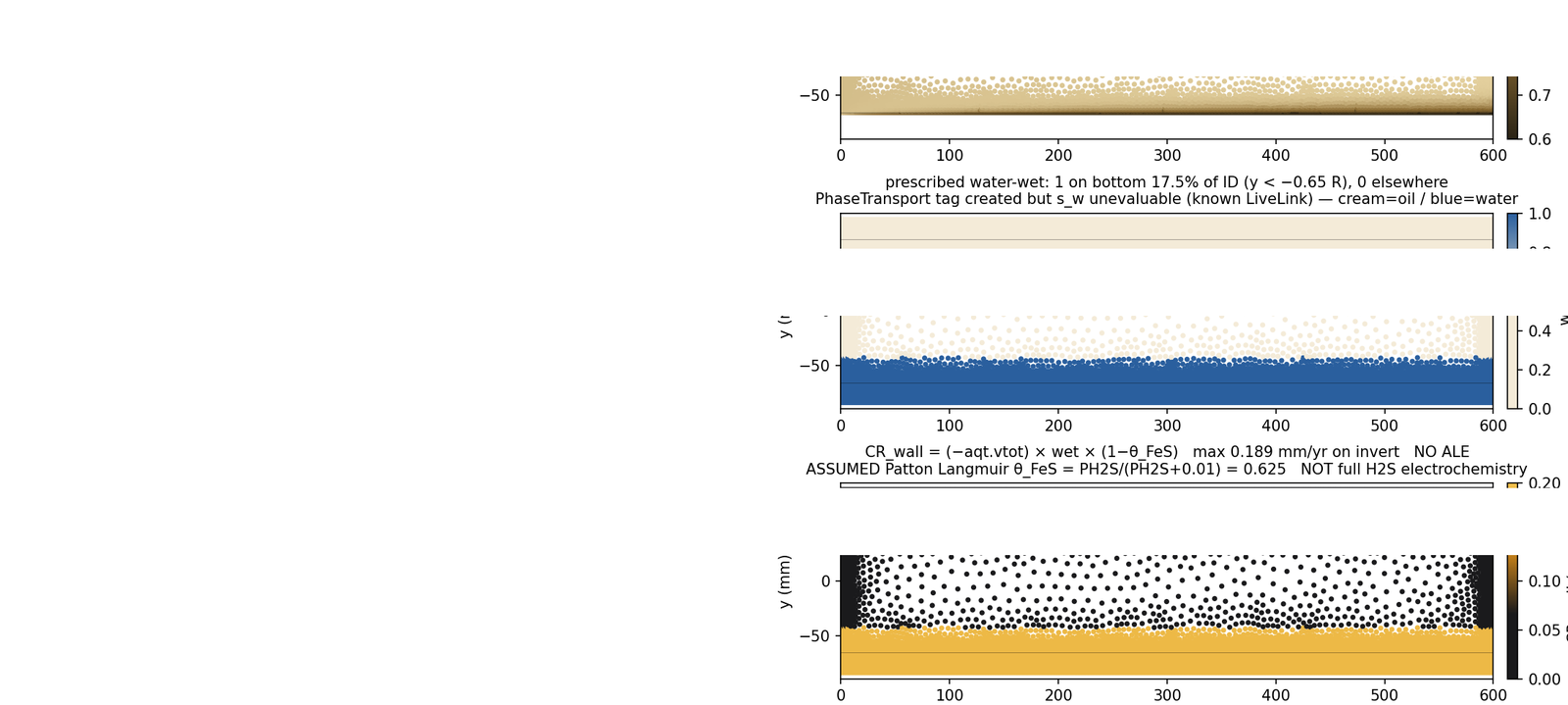
Water on the pipe invert and the wall-loss that follows
Water on the invert, and the wall-loss that follows.

Fracture mechanics & fitness-for-service

Fitness-for-service starts from the indication. Wall-loss, surface-breaking flaws, and fracture propagation — including porosity in pressure-containing welded assemblies — are assessed so an operator can decide whether to run, repair, or replace, with a defensible technical basis.

  • FFS of wall-loss and surface indications
  • Fracture propagation assessments, including porosity
  • Pressure-containing welded assemblies
  • Assessments to API 579 and BS 7910
  • Remaining-life arguments that can be reviewed by integrity, operations, and regulators
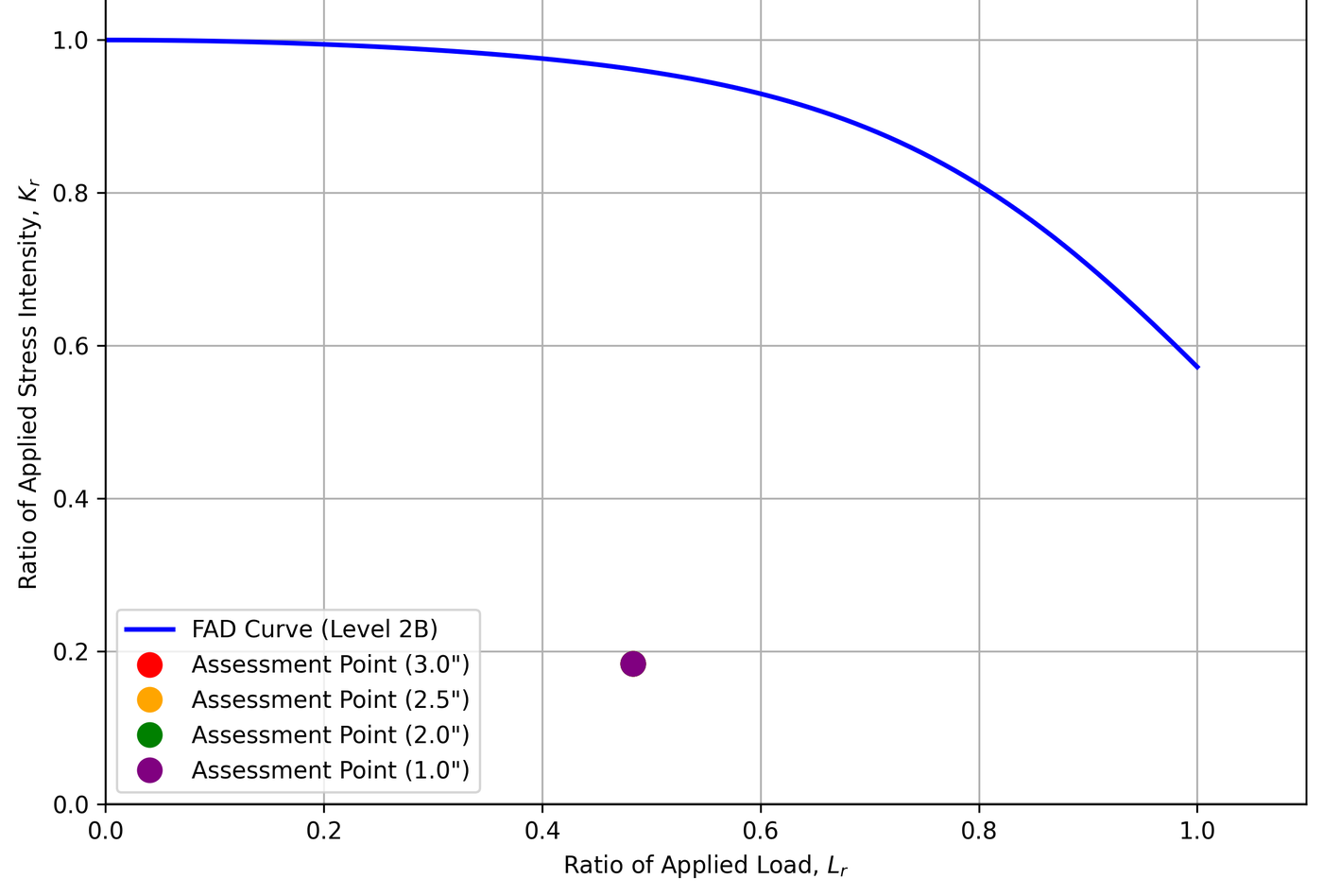
Failure assessment diagram for a girth weld
Failure assessment of a girth weld.

Materials selection & mill qualification

Material selection for sweet and sour service — pipelines, forgings, valves, induction bends, and nonmetallics — tied to specifications that mills and fabricators can actually purchase against. Qualification follows the pipe onto the mill floor and through the data book.

  • Material selection for sweet and sour service: line pipe, forgings, valves, induction bends, and nonmetallics
  • Project-tailored specifications for particular requirements: offshore and onshore, high H2S, CO2, dense-phase CO2, H2, ammonia, and chloride, for line pipe, components, forgings, induction bends, and non-metallics
  • Mill qualification worldwide: SAWH, LSAW, JCOE, three-roll bend, UOE, and HFERW
  • Statistical assessment of mechanical, chemical, and dimensional properties of pipes, plates, and coils
  • TMCP plate evaluation
  • Personnel and laboratory / NDE system evaluation
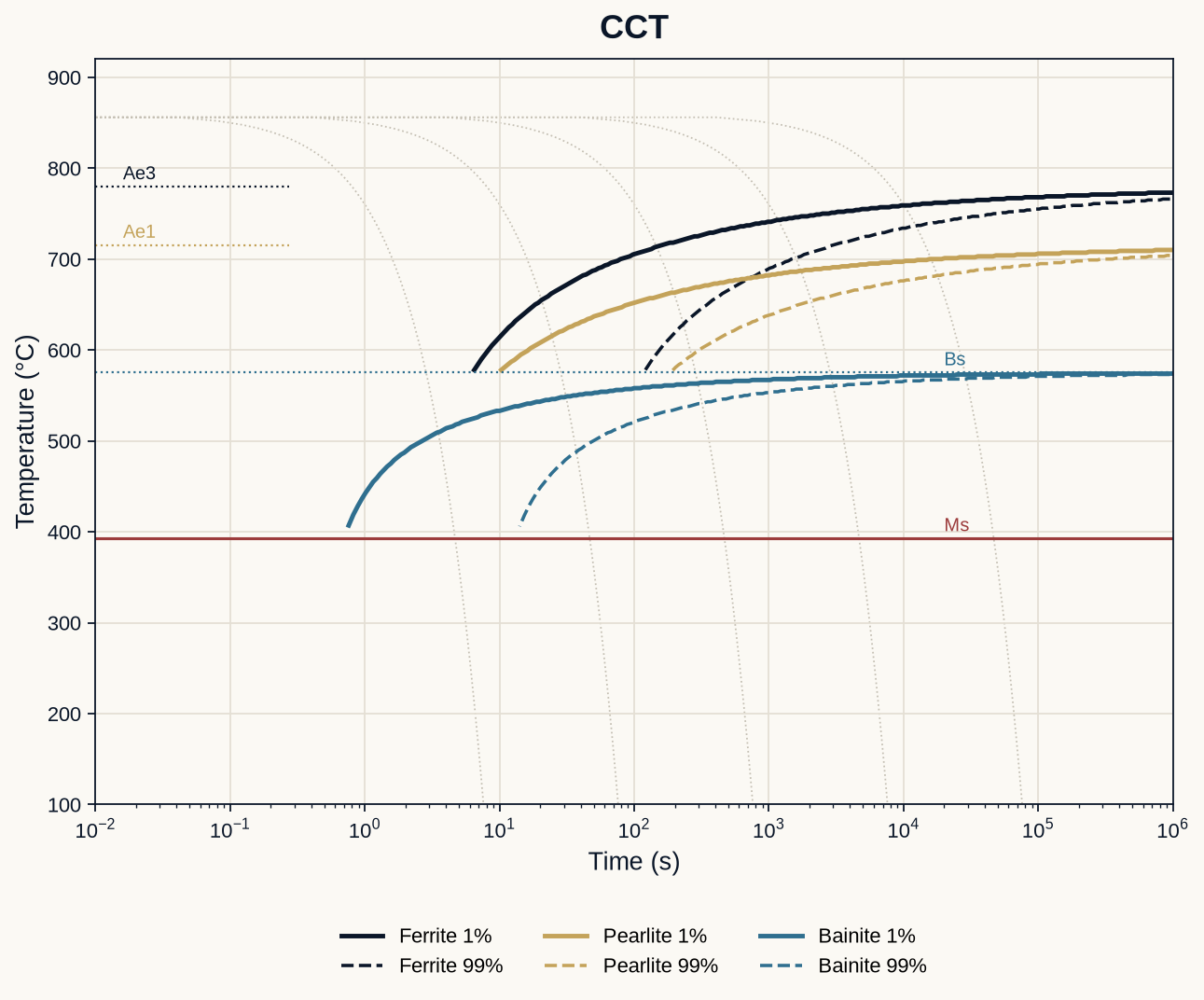
Continuous-cooling transformation diagram for a line-pipe steel
Cooling transformation for a line-pipe steel.

Welding technology & HAZ

Weld procedure and HAZ toughness are treated as a materials problem that includes welder qualification. Steel chemistry, heat input, and NDE have to agree before a WPS is a reliable control.

  • WPS evaluation and qualification requirements for pipelines and components
  • NDE systems associated with welding of pipe and components
  • HAZ toughness evaluation
  • Steel chemistry effects on weld performance, including use of the Steel Chemistry / HAZ Toughness Predictor
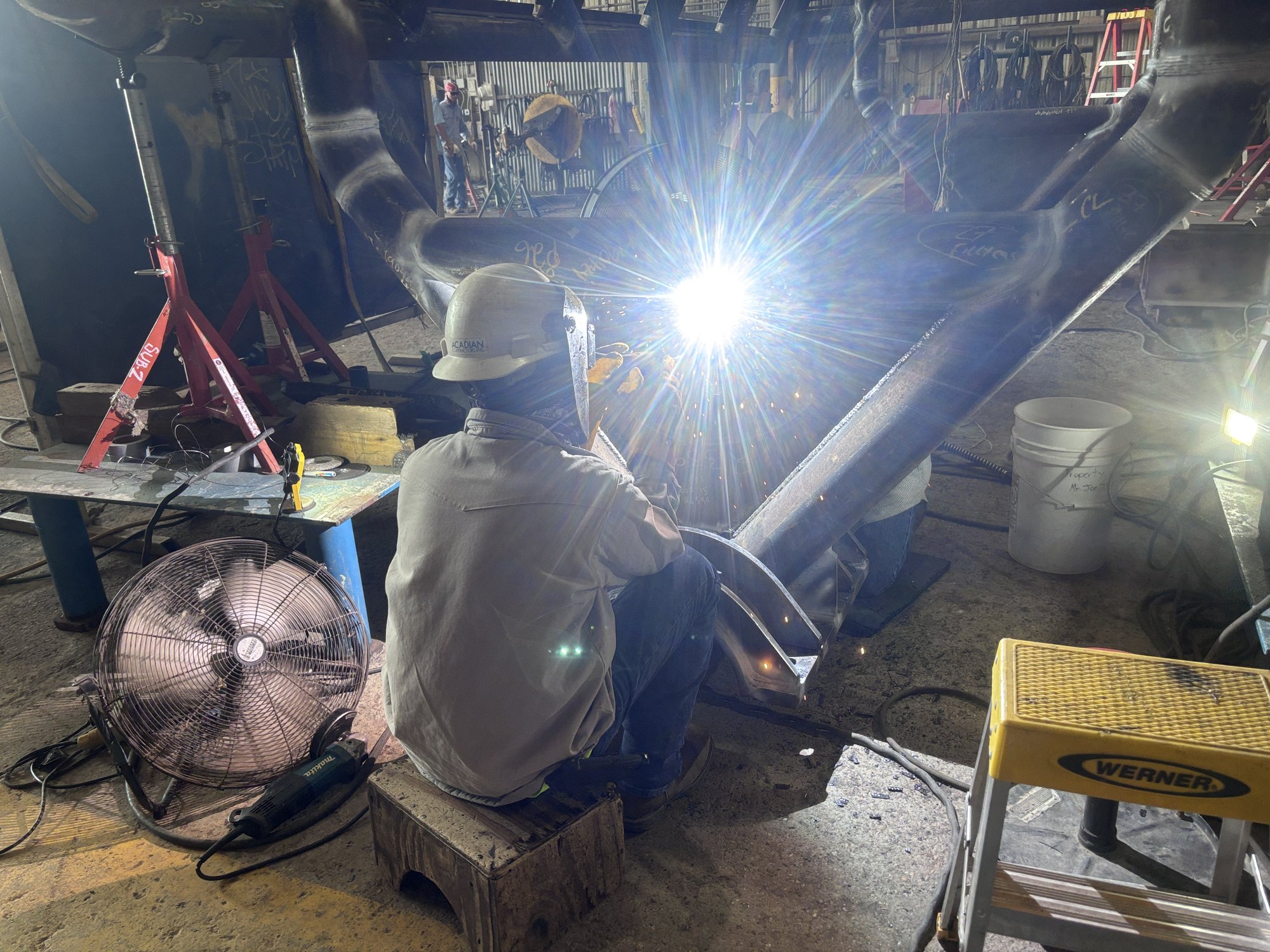
Pipe fabrication welding in a shop
Pipe fabrication welding.

Specialized inspection of critical components

Inspection is a scoped review of the component that actually carries the risk — a weld, a coated joint, a mill heat, a pressure-containing assembly — written so the finding can be used in an integrity or materials decision.

  • Inspection services related to pipe making and coatings
  • NDE system evaluation for pipelines and pressure-containing components
  • Review of fabrication quality, mechanical testing equipment, and inspection personnel
  • Inspection of critical welds, fittings, and assemblies in support of FFS, HIC, or mill qualification
  • Findings written to the same codes used on the engineering work: ASME, ASTM, NACE, DNV, and API

Codes of record. ASME Boiler and Pressure Vessel Code, ASTM, NACE, DNV, and API — applied as specified by the project.